All posts by wievielfarbenhatdiewelt

Liebster Award – 11 surprising answers, 5 excellent bloggers

The team of the great surf- and travelblog saltinmyhair was so kind to nominate me for the Liebster Award (“favourite blog award”). Thanks a lot! With that, they asked my 11 questions which I am going to answer in a minute. But what is the Liebster Award actually and how does it work?

The Liebster Award is passed forward from blog to blog for the reason of connecting and getting to know new blogs. Great thing! 11 questions are asked and after having answered them, the award is passed on again to different new blogs with new questions.

So these are the questions I got and my answers:

1. What drives you forward?  My natural curiosity to see places I couldn’t dream of to be real and to meet people whose lifestyle I couldn’t imagine before. My longing to feel, what I have never felt before, to be surprised and challenged in my mind by things that are far apart from the “norms” I know.

2.  What is your favourite post?  It’s China – a parallel universe. After many strange feelings for this fascinating country and not knowing how to define the reasons for it I finally managed satisfyingly to get it black on white. I like it to have some founded (political) criticism – or at least reflection – in posts, which is not often with me but worked quite well with China.

3. At which spot on earth did you think “this is paradise?”  It’s hard to admit (because I wasn’t totally convinced from Thailand as travel-destination and we disliked the existing tourist-patterns for everything) but it was on a small Thai island on the west coast, named Koh Phayam. Palms, fine sand beaches, warm crystal-clear water, colorful jungle bursting with life, very few people and a hut next to a beach bar with fresh-fruit-yoghurt, Phad Thai, beer and a kayak rental! It was a place where everything was given to feel comfy and not to worry about anything.

4. Which languages do you speak?  Unfortunately my laziness overtakes my motivation when I get to the point in a language, where I can make myself very basically understood and understand the other. I always feel it’s enough when I know the most important nouns, verbs, adjectives, one simple past, simple future and just put it all together.  That’s what it’s like with my Spanish and French. (I am a little more eager on English.) On our trip through Kyrgyzstan I learned a few basic words of Russian and I would like to continue learning it until my personal level of “making myself understood” is reached.

5. Flip Flops or Trekking boots and why?  Definitely Flip Flops! (If not even bare feet.) Trekking boots get smelly and wet in rain and make me a lot of blisters. And they’re heavy. I experienced that even worst paths can be walked carefully in Flip Flops or bare feet. (Watch how the locals do it!)

6. What is your treatment against homesickness?  a) If it’s possible: connect with back home. Skype with a friend, post a blog or read facebook posts of friends. Otherwise b) distract myself and get drunk with locals or fellow travellers. c) If alone in the wilderness: Make fun of myself. Sing stupid made-up songs about my feelings in another language flavored with a saxonian accent and record it on cam, look at it and laugh my ass off. Or, always welcome: Make friends with little animals or plants and talk to them.

7. Did you ever get stuck in one place?  Quite often! Mostly because of laziness after exhaustive traveling. I got stuck in Goa for a month because it was just too convenient after two months of Indian hustle-bustle and again in Kashgar, China, for two weeks, almost not leaving the hostel, because of the security, comfort and the laziness after 9 months on the road, just enjoying internet, fellow travellers, story-sharing and no need to rush on and “having” to see new things.

8. What was the weirdest thing you’ve ever eaten on a journey?  It was probably the dog we accidentally had in Yangshuo for breakfast because of the lack of common vocabulary. In China we often just pointed at pictures of meals that looked good. And although the restaurant owner was reassuringly asking whether we really wanted that dish, we were only making an effort to understand what it was about, when the unusually high bill came. Some young passing-by Chinese guys took the time to stop and translate because we were loudly complaining about the price. In the end the surprising answer was ”Well, it is that expensive, because dog is that expensive…” After the meat had already been really disgusting and chewy so we had to leave half of it (what we NEVER do), that information really turned our stomachs.

9. What was your most impressing encounter while travelling?  It’s really hard to tell. Impossible in fact. I remember, letting different faces of people I met slide in front of my eyes, that I very, very often thought: This person – his lifestyle, his story, his responsibility – is so impressive! In a way, most of the encounters left me baffled and in deep thinking.

One of them was surely our friend in Nyaung U, Bagan, Myanmar, whom we met down by the river when the sun was rising beautifully behind thick haze. We shared not a single word of the same language, but he was really patient and generous. Living in a tiny straw-hut with his three children and wife, he let us store our luggage in the hut and promised to take care of it (again: wordless) while we were looking around. After he had fetched us with gestures from the village square for dinner, he and his family were rapidly improvising a pure luxury dinner-set: They were getting chairs and pillows (sitting on the floor or standing themselves), installed a light bulb out of nowhere and provided a reach traditional meal while they were not eating themselves but smiling about our happiness and giving….

Another impressive encounter was our selfless friend Mr. Li in Guangzhou, who lend us bikes and showed us around town for two days, inviting us for dinner, insisting on paying all the bills, and revealing after we had got to known him a little better, that he had another “hidden” child, living with his relatives some hundred miles away, because of the strict one-child-law in China. He showed us a video of his hidden daughter, sighing, because despite he and his wife were working fulltime they couldn’t afford to pay off the government for the second child, which is about 40.000 Euros.

We met many “children” in Kyrgyzstan working as responsible shepherds already, looking after siblings and earning money for the family, having big dreams in their heads. So did many youngsters in India, working hard, selling, making business, being clever and focused and very responsible at a very early age. There were woman with heavy burdens of poverty, responsibility and husbands they didn’t love, sometimes couldn’t even stand but they never complained and never neglected their responsibilities.

And then there is our friend Alek Leka, who is traveling the world on his bicycle since 20 years. Living on nothing, not having a bank account, nor insurance but being one of the happiest and funny and wise guys I’ve met.

10. Where is your “secret spot” in Europe?  In the wilderness of the Scottish Highlands; in its history and mystery. Somewhere between… nah, I wouldn’t tell 🙂

11. Catchword “Eco-tourism”: Do you travel thinking about sustainability?  Sure whenever it’s possible we rather leave kids with a repair-kit for their bike than with a handful of candies. Eco-tourism is a delicate topic. It’s much talked-about and definitely difficult to place oneself in it. When it is possible, we rather take a bus or bike than a plane. But we are no Messiahs – when the duration and expenses of an overland-journey overdo the price of a flight by far, we still take the flight. We always eat at small unknown places, stay in the hidden hostel and don’t necessarily follow the number one recommendations of the lonely planet, so at least we naturally spread the money around community.

———————————————————-

For the next Liebster Award I nominate Alek Leka of aroundtheworldnomad, Helen of Helenstakeon, Sara & Matthieu of aveloversl’orient, Thom of ThomsTravelTime and Stefanie of Kurzvordersonne.

The questions are:

  1. Three places you want to travel (no matter if realistic or not)?
  2. Which feeling does blogging give you?
  3. What differs you from others?
  4. What is always with you on journeys?
  5. How important are travel-companions to you and why?
  6. Something you wouldn’t recommend anyone to do?
  7. A situation you doubted to be real.
  8. What are you doing while traveling when you want to withdraw and switch-off?
  9. How is your relation of planning and spontaneity while traveling?
  10. Did anyone ever say anything to you about yourself on a journey, that is still lasting until today; that changed concepts about yourself?
  11. Something you experienced on a journey that you decided to never forget.


And the “rules” for enjoying and getting connected are:

  1. Show on your blog that you’re taking part in the Liebster Award.
  2. Name the person who nominated you and link him.
  3. Answer the 11 questions.
  4. Nominate another 5-11 people for the Liebster Award.
  5. Create 11 new questions for the nominated bloggers.
  6. Write this rules in your Liebster-Award-post.
  7. Inform your nominated bloggers about this post and their nomination.

On the run 1: War of the Worlds

Possessing, not possessing. Settling, wandering. Security, adventure: Responsibility and binding – constraints of too much to care about, or freedom and fighting – constraints of too little to live carefree. What is easier? What makes happier?

Some days I only wanna run. From my habits, my laziness, the boredom, the dullness, my fears. From my history, my fate, my existence. From convictions. Rules. Routines. Expectations. Far, far away!

“Feeling free” – after basic human rights are fulfilled, the further necessary extend of that tickling feeling is discussable. It’s relative, it’s about hedonism, it’s about sense. We are, all, already relatively free – the standard westerner with standard wealth. Has a bloody lot of options. So I don’t want to complain, feeling silly doing so. But, still, somehow everything does not feel right! Someone close to me recently just nailed it and illuminated me with the discomforting truth: I still haven’t arrived yet from that big journey which changed everything. I am still staggering between life-concepts of there and here. Because such a trip does change everything. It changes you in a way you can’t explain. It changes your mind in a way that doesn’t make sense in our world. You can hardly explain the feelings you had in single situations during that trip, so how could you ever explain the conglomerate of “weird” feelings that stick to you afterwards? And suddenly you don’t know any more what is meant to be your way, your home, your meaning of life. You feel misunderstood and question yourself. What is reality? What is real? What is important? And what is you?

It might be tough to acclimatize to a strange culture. But after having immersed into several others, that are so far apart from your own, it might be the hardest to acclimatize to your own culture again. Seems to be the strangest. In this weird world of ours (freaking weird norms, expectations and demands!) people seriously are complaining because the decoration on their cocktail is made from the wrong fruit! (“But it said pineapple on the menu…”! “Yes dear, you are right. Sorry I forgot. In this world you have the right to get what you paid for. I’ll get you a new cocktail in a sec and, of course, sorry for your inconvenience, it’s on the house.” Epilogue: She sips it, quiet now, her red-colored lips tight around the black straw, but she still does not seem happy…) In the evening (9pm, finally home, daylight long gone, macaroni in the microwave) you get short-time-sentimental over a documentary about a small boy in a favela of El Salvador, smiling with pure, genuine joy, because he got out of the crimes of the merciless drug scene just by starting Capuera lessons that took him to a new environment! And the next morning you put the papers away (full of things, real things, you can’t even imagine but wished you never heard them) and you are supposed, expected, to just snap back to our world of smartphones, paperwork, enormous bills and leftovers again with a smile on your face – being so lucky in life – just sighing occasionally that you can’t save the world anyway.

Yes, our life is, for most parts, not comparable to that of billions of other people (really lucky, huh? But is that actually true?) And yes, on our own, trapped in daily-life-routines, no one of us can save the world. But as well as I sometimes feel far apart from the world I am currently living in, I feel part of it all, I feel trapped in it, I feel responsible. I feel pain. For things we are collectively doing wrong. Or not doing at all. I do feel guilty and unhappy and as much as I want to do things differently, I feel I can’t, I don’t know how, so I just want to run away. To the favelas, to the boy, to something that makes real sense.

It’s about fucking turning-time. (We all carrying at least a piece of that awareness.) And – for I haven’t arrived yet anyway – I don’t feel right about joining in again into some sort of life I do not totally agree with its terms of use…


The feeling of the Patiala

Everything starts with the right trousers.

One year, four months and ten days after I have bought my pair of Patialas (extremely wide Indian trousers worn under a Punjab dress) in a tiny shop  in Varanasi – busting with colorful fabrics and smelling smoothly of incense sticks – I have worn them for the first time today. And suddenly it all came back to me – the heartily smiles, the overwhelming noises, the exciting confusion of being thrown into a totally strange world with countless details to absorb. And suddenly I knew I would travel again. Soon!

When you wear such trousers, you feel as free as wearing nothing. You feel so feminine like the whole world would fall down to your knees. You feel so exotic like everyone was looking up to you. You feel so safe, you know, whatever you are going to do will be the right thing. You feel so cool as if you have seen the whole world already and you feel so ready for the whole world that nothing can stop you.

Of course I had considered another trip already. But the feeling of the Patiala had given me what I needed: The feeling of pure freedom that felt totally right. And the soothing conviction that it was a good decision when doubts where on the forehand.

So thanks to this amazing piece of purple Indian fabric I will be on the road again, starting on 17th of July in the direction of Hungary to the Ozora festival, with my Patiala of course. Having no idea where this trip might end I do not claim it isn’t a run from something I haven’t understood yet. Because it certainly is. I am on the run. But it is very likely I will some when end up somewhere I will feel happy. Because only when you move you can arrive at the right place.

Close to the meaning of life

Ants exist because someone has to milk the lice. Worms are there so the plants have a fluffy ground and the rain can drain. Deer walk about for there is some grassland left without forest suffocating all the fragile plants closer the ground and the wolves don’t starve.

Even the stones are there to provide the moss and plaits a base, to challenge the down-coming water in it’s run and to save some precious warmth for the lizard. The grass grows to feed the cattle and to give the ticks a spring board to their victims. Trees grow and fall and rotten and become rich soil again… Ok, admittedly, all of this is a philosophical or a question of belief. But everything at least seems to have a working order! What in hell is the meaning of the mankind? What is our reason, our excuse for being? What are we supposed to contribute?

I would love to send a questionnaire around the world to thousands of different people with different lives and read all the diverse opinions of this maybe most interesting and yet most difficult question of our existence. What answers would you get? I bet a list from A to Z! Maybe starting with “we exist to amuse ourselves”, “to become rich” and “we are made to form the world” or “to save the world”.. I have lost myself in that question long ago and keep struggling with the sense of human and my personal existence.

But there is a growing number of other people nowadays asking the same question. Since we don’t have to worry about surviving anymore but about the size of our TV and the best restaurant to eat at, we do have too many choices of everything – what to do, buy, think, become… Since we are let to decide for ourselves and not been decided about (yes, suddenly we are actively responsible!) by the nature, fate, the church, the parents or community which we were not long ago so dependent on, the meaning of our individual lives became blurry.

I think today two kind of people might be happy: those who don’t ask themselves that question and those who have asked it themselves long and insistent enough to eventually find wisdom in it. All others, I believe, must sometimes feel the same slight melancholy pain I do of that hidden and unanswered question. When they gasp for breath and realize people are just running about, chasing vague aims they don’t even know, feeling the need to achieve something the norms prescribe while they are distracted by things that promise a happier, more fulfilled life though those just pursue to push the nonsense they don’t need still in the hope to gain something they think they want.

When you turn your head towards nature it’s obvious that between birth and dead every living creature was given the duty to do certain useful things to justify it’s existence. What do we actually contribute to the world? What are we supposed to do? Some people would say they do useful things like they are involved with charity, help other people or they pay for reafforestation or things like that. Those things are good, no doubt, but they are admittedly only a compensation for what others or we ourselves have done bad before ergo should be naturally and not an achievement to pride oneself with. Those things are a syndrome of our modern society but no answer to the question for the reason of our existence. And unfortunately I can’t please you with the answer.

But back to the survival. What about living to survive? Since that is basically the main aim of every living creature there must lay some answer in that. I have had a light bulb moment recently while camping in Scotland how at least to kill the worry about the meaning of life. I already saw how it works many times in Asia and now really felt it for myself.

It’s really simple: When you are busy with surviving, the gnawing but obviously luxury question for meaning doesn’t exist.  For us – the standard westernized person – it is quite a while ago that we seriously had to concern ourselves with surviving. To concern ourselves with an outcome at the end of the day that would strictly and mercilessly decide about we living or dying. Hunger, cold, danger or illness. For many, many other people on this planet it is still a daily reality. When you have to basically work all day just to survive on a human level you don’t ask for another sense because that is the sense. Providing a dry, warm and safe sleeping place for yourself or even children, managing to have enough and warm food and warm, fresh clothes the next day keeps so many (predominantly) woman around the world busy permanently as a full-time job. They don’t have all the luxury we do, they can’t go to ALDI buy ready meals, stuff the washing machine with dirty clothes and put the children into day-care so they have some leisure time. They have to work really hard for all that and when they’re finished at the end of the day they can be seriously proud of themselves because it’s a bloody hard days work. Do you think they ask for another meaning in life?

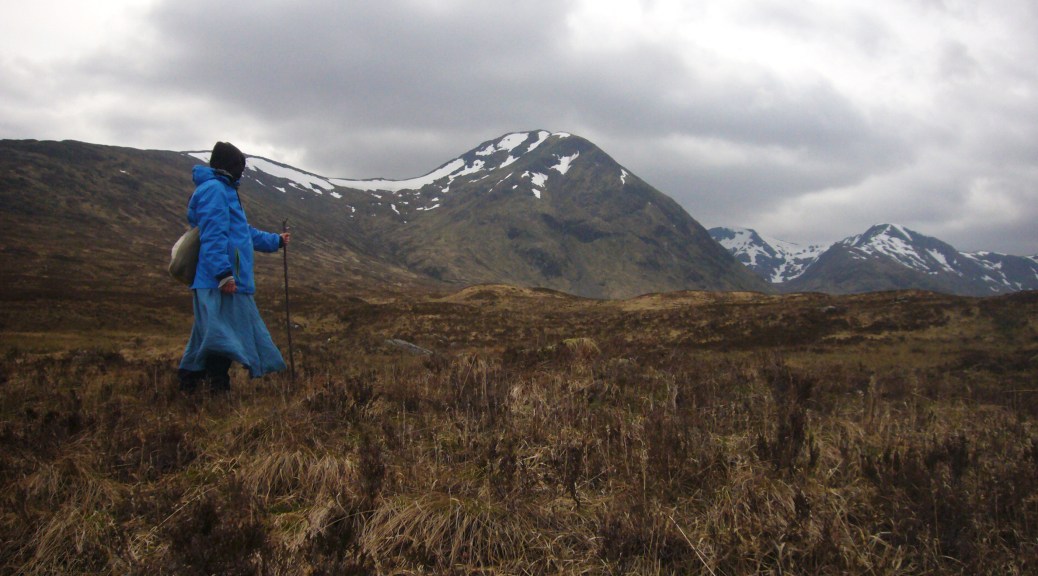
So all that came back to me when I was camping some days in the wilderness of the Scottish Highlands – often twelve miles each direction to the next house, human, civilization. The weather is tough there in early May and I was fighting permanent rain, wind and cold. It took me some hours per day to pack or set up my tent and stuff properly, to prepare it against the heavy wind and wet from above and underneath. When that was done, depending on the distance I had walked that day and the spot I’d found, the preparation of food was difficult sometimes. Drinking water was to fetch from far, gnawing hunger and difficult weather conditions made it often a laborious act to eventually get some by then desperately needed food. I was wrapping up in my sleeping bag long before nightfall, exhausted, because when you don’t live in the comfort of a house warmth and light are rare goods and you don’t expect anything exciting to happen anyway (like I often do at home at 4 a.m. lurking around unsatisfied for something on facebook). But I felt truly happy because everything I had done that day had been absolutely necessary and therefore had been meaningful. I didn’t had to worry whether I did the right things or not, because I only did what I had to do and if it worked, I did it right. No questioned decisions, no struggles, no regrets.

I have thought about what is really meaningful in my life often in those early nights between those snow-capped mountains hiding myself very basically from the reckless whether with nothing to do. It came to me that feeling and enjoying those very moments were the answer. Being able to lay there in all needed comfort and satisfied with no further wishes. When I get close to nature and far from all the unimportant stuff of civilization I get very close to my basic needs. And I feel very clearly what it does not take to be happy. Not the nice flat, not the good beer, not the pretty skirt and not even the beach-holiday. In some conditions being able to “survive” the day is a proper reason to feel sense. I wished it could always be like this! Freed of options, freed of expectations, freed of temptations! I’d be happy and satisfied without even knowing the cause of the human being.


China – Parallel universe

China is not very different to Germany. Woman dress up in mega short skirts and men try to show off with cars and generosity. Chinese people are mad keen on the newest technical devices and (what differs them from other asian countries) the majority has the money to buy them. They use high-speed trains, live in gigantic clean and modern cities and treat nature like they shouldn’t. They have few children and little believe in religion. Money and individualism appear to be the new priorities in life.

All this seems not very different to us. In theory at least… Still I call China a “parallel universe”. And that’s not (just) because they eat dogs, beetles and cat brains – you could theoretically find such habits in some Bavarian area. But for me China was even more alien than for example India, where they have a huge bunch of weird traditions and pray to Elephant gods… So why is it China is so similar but yet so different? I thought a long, long time about that question and came up with some answers eventually.

It feels like a parallel universe because the people’s minds are so different in many aspects. The Chinese culture seems to be one of few in the world which is not westernized at all. Not American-toned. That might sound strange at first. Like I described at our China trip this country is so big and mighty most people don’t seem to care too much about the rest of the world. And because China is, sadly, so shielded from it they don’t know much about it either. They have their own huge brands, products, pop stars, networks, traditions, habits – which are similar but still oddly different – they don’t orientate much on the western/american ones like most other cultures do. – The whole of Europe is looking towards the States, central Asia peers at Russia and Europe – everyone really seems always to orientate on the bigger and more “modern” culture to integrate some of their idols lifestyle into their own. China doesn’t. Because of two reasons: because they simply don’t need to and because they are not allowed to.

So what provides the parallel-universe-feeling is that China is an independent world-might with their own rules and habits. Even the most basic gestures (which are the onliest ways to communicate when you don’t speak Mandarin) are completely different to those you are used to from the rest of the world. Numbers are shown with the fingers in a totally different way and so are welcoming or negating gestures. If you don’t know the rules you are likely to become desperate very soon because it seems that all basic human communication doesn’t work with Chinese people just because it’s an alien code to you. Eating a raw carrot in public gets you great deranged stares (no one in China would ever eat anything raw) and when you give someone a big present he would just say a brief thanks and put it aside not opening it. Try for a lift and somebody even driving 80% of the way to your destination would just say sorry they can’t help you and drive off. One of the highest priorities of Chinese people is being polite and not loosing face which provides the base for (to us) weird actions and also shallow encounters.

When I sat together with an Indian woman my age who had four children and was devoted practicing Hindu rites we had topics to talk about and we saw and judged many things in life the same way. A Chinese woman though (I am sorry, but mainly appearing as girls) was always inapproachable for me. I felt I would never experience her real inner feelings. She would not speak out loud what she thinks.  Because everything in China was made to be at least a perfect facade. Everything in China had a beautiful, correct, neat and polished surface and you wouldn’t know if it was real or you were just bluffed. And so you wouldn’t know if a Chinese person said or did something just out of politeness or because he really felt that way. You wouldn’t know if that “old town” was really old or rather new build. You wouldn’t know if those smiling employees were truly happy or in fact very sad. You wouldn’t know if someone invited you because he really wanted it or because the politeness-codex forced him to do it.

China was a big strange riddle for me and even after over 3 months I felt I didn’t get any closer to the rules of that similar-appearing parallel universe.

Religion

Almost every country we went people were dead religious.

Hindus, (semi-)Buddhists, (semi-)Muslims, Sikhs, Christians, Animists… People care about religion and it often determines their lifes – organizes what they do, what they are allowed to do, what they would never do, what their moralities are, what they wear, how they behave… And sometimes even who they are. Our friend Ulan in Bishkek, Kyrgyzstan, called his son Islam. Because he believed in it so much and wanted his son – given from Allah – to represent it.

People often asked us what religion we believed in. Mostly we said we were Christians, because everything else would have been impossible to explane with only 15 words of the same language. Philipp, who grew up being catholic, felt very attracted to Buddhism since years. Therefore he was quite happy to wear his Buddhist necklace he got himself in India on the journey. One day in Kashgar, when he passed the most populare mosque in town after the friday’s prayer he got into talking with some guys. Then there came some other guys. They asked him what religion he believed in and wheather he was a Buddhist. He answered (like he always did) with a friendly smile that he was “a little Buddhist”.  But they told him with a grim look “it is not polite to wear this (grabbing his necklace) in front of a mosque”.  Because discussions about religion are always a very delecate topic he managed to change it and soon went away….

So naturally you have your thoughts about your own religion and wonder about others. You spot and observe the “strange” ways of people practising theirs. And you have your thoughts and feelings.

I moved out of church, having been evangelic before, because what my religion told and symbolized was not what I felt I believed in. I mean, come on… A bleeding, abused guy on a deadly cross who is supposed to symbolize that we should always remind all our sins because he died for them? What a motivating thing to believe in! Especially when you come across comparisons like the rich and colorful Lord Ganesha who removes all of your obstacles!

But what did I believe in? Certainly a lot! Plus I loved many trivial, daily things that result from religion. Like woman wearing skirts. People having collective prayers. Not eating meat. Not harming living creatures. But seeing people living in partially radically restricted ways to follow their believes and obliged duties? It’s easy to understand how it works for the others but at the same time it isn’t understandable at all. Sometimes people suffer a lot although they pray every day and they are the most devotional people. Their lifes often don’t work out the way they wish for although they would have deserved it so badly. But aren’t they still the happier people after all? Are we (western people) maybe so unhappy because be don’t believe in anything anymore? No guardian god, no protective and sacred familylife, no moral doubtlessness, everyone just on his own with his misery, fighting for his way.

I have not found “the one” religion for myself yet. But I have been inspired a lot by many different ones and taken a lot from them home and to my heart. Moralities. Believes. Superstitions. Habits. I try to worship every plant and every insect and every day I go to sleep I pray to Ganesha to remove all the obstacles from my way and a silver Buddha face is glowing wise and guarding over a candle in my room.

The Uyghur train

Because trains in China are not nearly as cheap as expected I decided for the third class instead of second for the whole way from Chengdu to Kashgar which means a seat in a big carriage instead of a soft bed in a six-person compartment for three days and three nights for exactly half the price. It was a great as well as a stupid decision. I would not do it again but I am grateful to have made the experience once.

The first day and night were great. All was very quiet. I met some nice Chinese students and the conductor was friendly enough to even show us an almost empty carriage in the evening where we all could take three seats to stretch and sleep quite properly. I visited Philipp in the sleeper section several times and wandered around. Because it’s common anyway in China to always provide hot/ boiled water for tea plus on the train everyone eats instant noodle soups at least three times a day (I’ve seen mothers entering the train with two gigantic plastic bags filled only with pots of noodle soups!) there is always plenty of hot water provided on Chinese trains. In every compartment is a big tank with a burning fire underneath or even small cans where everyone can get hot water at any time. It’s (the onliest) drinks and food.

On the second day it became a little more crowded (mainly with Han-Chinese people because we hadn’t entered Uigurien yet) but still there were seats available and we could walk around, chat and eat a lot of noodle soup! In the evening there were less spare seats so I had to sleep on only one, sitting.

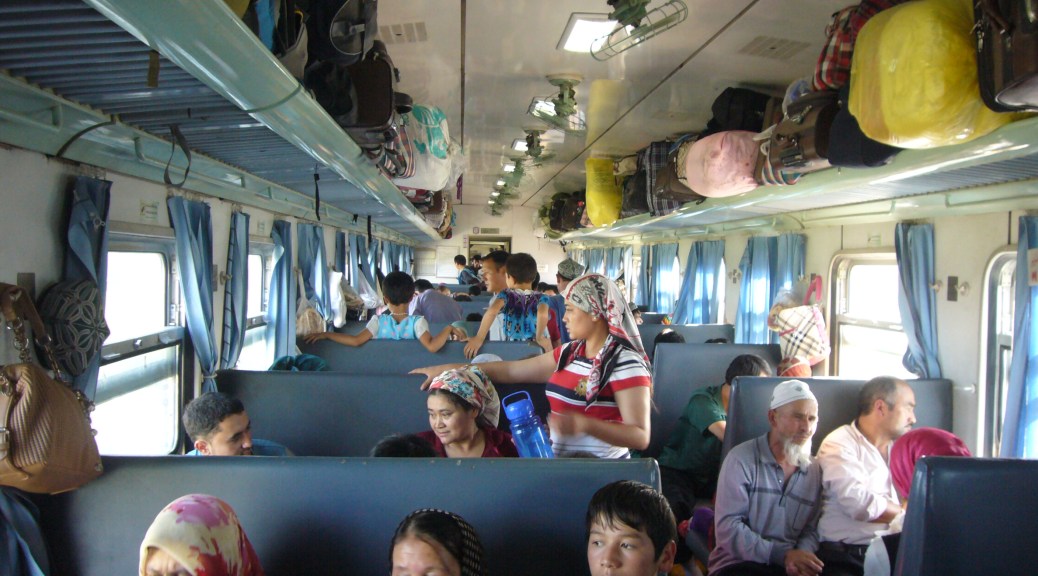
After our one day stop in Urumqi we entered the train again the next morning. Philipp went into one end of the train for the sleeper and I into the other – the third class again what I now felt for the first time immediately! My carriage was so packed with families, tons of luggage and loudly discussing people that not a single centimeter was spare anymore. It took almost an hour until they all had settled and I could claim my seat (because it of course was already taken). Almost all people were Uyghur, only a few Han remained. The cultural difference was obvious on the first glance – different faces, different clothes and after the following 24 hours I couldn’t deny it: different manners. The nice Han couple who spoke a tiny bit of English helped me to translate to the Uyghur woman who had taken my seat that it was my seat and slowly and grumpy she moved from it.

I felt uneasy because most of the people were looking stern, no one was smiling at me, the westerner, the invader, and the family of the banished woman was angry anyway. I visited Philipp in his nice and peaceful sleeper compartment were classical music was played over the loudspeakers. But soon a conductor came, controlled our tickets and told me fiercely to return to “my class” immediately. We explained to him that I only wanted to have lunch with my “husband” and would return afterwards and he replied grimly we should hurry then.

I went back and, of course, my seat was taken again, this time by someone else of the family. At least thirty people were standing in the hallway anyway because there was not nearly enough space. I decided to stand some time on the corridor where people were smoking. The train was moving through endless desert, only the mountains on the horizon changed their shape sometimes. After some hours I wanted to sit down but the whole family was now sleeping on the seats and tables so I didn’t want to disturb them. I was slowly running out of water but the big tank at the end of the carriage was empty already. I stood on the corridor, watched the desert passing by and waited. After a while people were getting hectic and voices rose. The whole carriage was grubbing and moving and suddenly I realized why: A man pushed a medium-sized silver tank which was obviously filled with water and all woman started relentlessly fighting their way to get to it in time. I followed them but waited politely of course until I realized that there would not nearly be enough water for everyone. So I started to push my way through as well but as it got to brutal I decided to get my water later from somewhere else. Mistake!

When I wanted to visit Philipp again and fetch some water I only made it to the next carriage. A big grumpy asshole of conductor stepped into my way and wanted to see my ticket. When I showed it to him he pointed and said “Your place is there. Go back.” I said “I need some water.” He said “Not here”. I said “But my husband is in the sleeper, I have to see him.” He said “No. You have third class ticket. You stay there.” He was just big and mean and I was pissed and returned to my class. I was worried because I was hungry and thirsty and I was afraid of all the unfriendly people and afraid of the upcoming night. Luckily Philipp visited me later to see how I am so I asked him to bring me some water to my “prison”.

I was standing and smoking patiently on the corridor until it got dark and I got tired. I decided it was time to finally claim my seat for the night. The family had sat and slept on my seat until now so it was my turn now. I stood in front of the big lazy woman on my seat, pointing, showing, asking her to leave. But she wouldn’t move. I thought she hadn’t understood me so I asked the Han couple again to translate her. They did. But still she wouldn’t move. The whole family was staring at me and she kept ignoring me. I was furious but what was I supposed to do? I didn’t want a fight with the grim Uyghur men of that family and I couldn’t even ask the conductor for help. So I decided to just ignore the bold behavior and sleep on the floor somewhere. The onliest problem was: There was no space! People were already sleeping on the floor of the corridor and even under the seats! There were only tiny spaces to sit in the smokers corridor. So I sat and tried to sleep somehow and realized that Uyghur country was an area with different people and different rules. Maybe the rules of fighting or resigning.

Uigurien – trapped in the giant’s golden belly

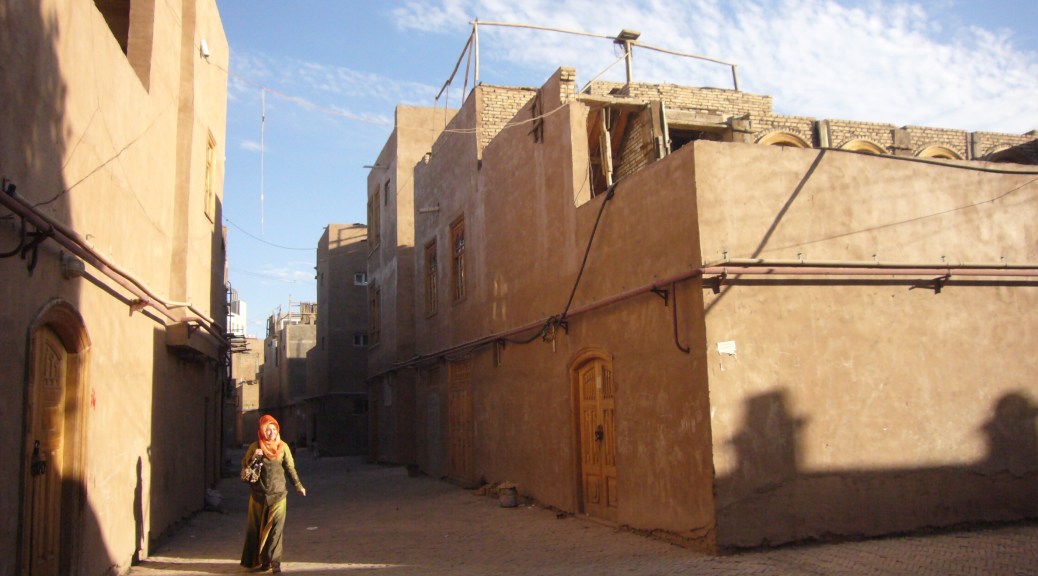
No Uyghur person ever spoke completely openly to us about the relation of their “ethnic minority” (though majority in Xingjiang province!) to China or their feelings about it. Still they told us a lot about the history of their culture and some of them were clearly hurt and felt mistreated in their individual culture by the powerful Chinese politics. And when already the facts told the unfairness of the situation they seemed to get scared and only gave hints by saying they didn’t want to talk further, we should see for ourselves…And we did.

We nodded to our friend Arslan who was studying in Chengdu and now visiting his family in the 3000 km away Turpan – one of the old important towns on the ancient silk road. We looked outside the window of the train winding through thousands of kilometers of desert, spotted a huge oil refinery every now and then in the middle of nowhere and resuming what he told us.

It had always been the Uyghur people living in the great desert land between Urumqi, Kashgar and Hotan. They had been invaded by almost every bigger dynasty or civilization since then. They “have been” Mongolian, Arabic, …. Now they all had to learn Mandarin in school and where still always treated as something worse everywhere in China and got the worse jobs. The area around Kashgar had always been their country. Still it almost never had officially been their country. They were a banished culture and were never given the chance to be an own proud country.

The oil rafineries belonged to rich Han Chinese people from further east. Arslan told us there was three times as much oil hidden under the Xingjiang desert than in the United States. A while ago the cities in Xingjiang (Kashgar and Urumqui) province had a 60 percent majority of Uyghur people. But the Han Chinese in this province are now allowed by the government the exception of getting more than one child so they can expand their influence through population.

We experienced many Uyghur people skeptic or even bitter and not very friendly to foreigners which we excused and understood because we imagined every stranger must appear like another potentially dangerous invader to them who might want to take something away from them again. From their deeply hurt and repressed culture.